No author • November 20, 2026

Abnormal Pap Smear Results: What Follow-Up Tests Might You Need?

Cervical Health Guide · Seoul

Abnormal Pap Smear Results What Follow-Up Tests Might You Need?
November 20, 2026
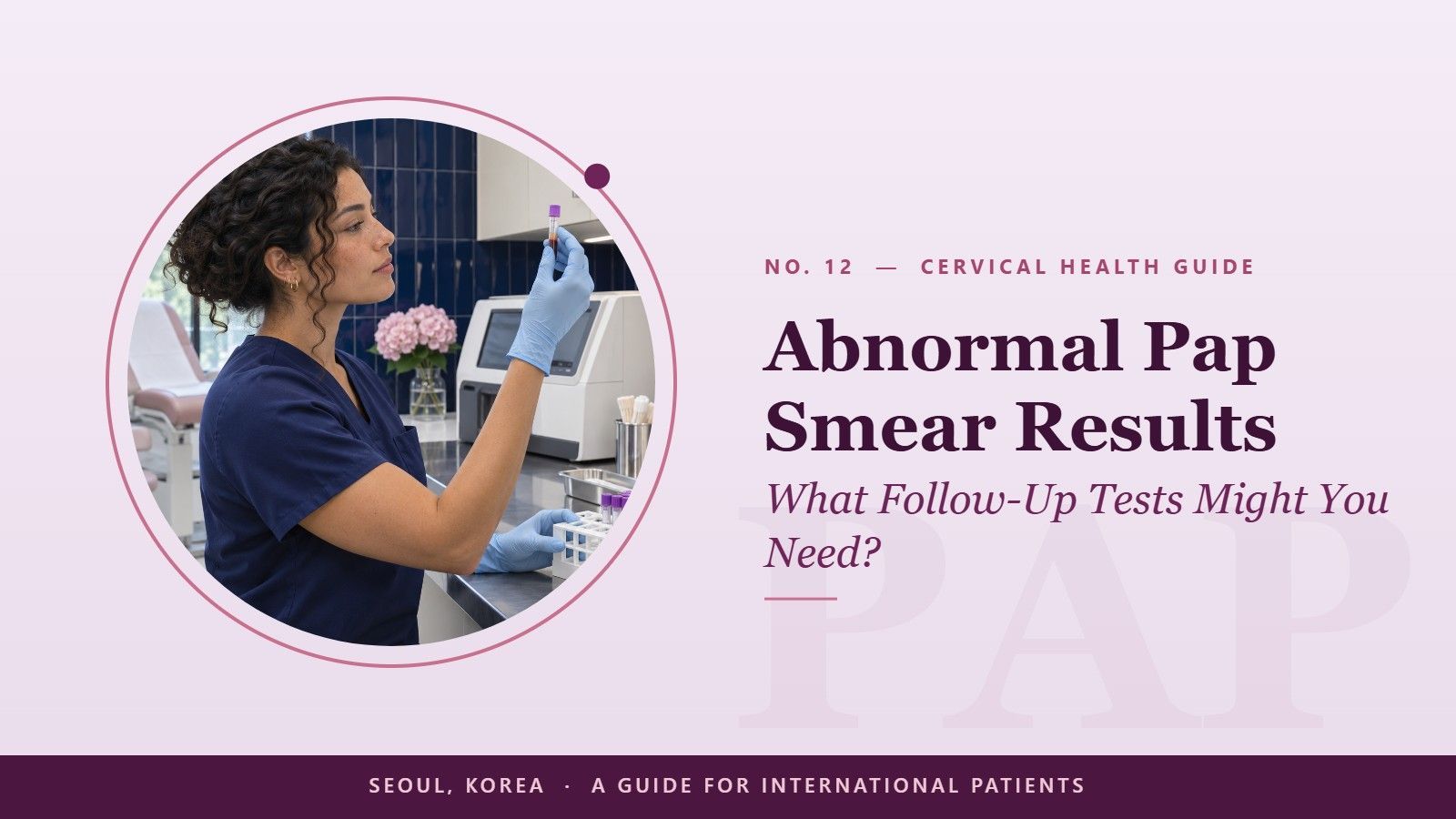
Abnormal Pap smear results - follow-up tests such as HPV testing and colposcopy in Seoul
Quick answer

An abnormal Pap smear means some cervical cells looked different from normal. Most changes are mild and caused by HPV, and many go away on their own. Depending on the result, the next step is usually an HPV test, a repeat Pap in 6–12 months, or a colposcopy to look at the cervix closely and take a small biopsy if needed. Very few abnormal results turn out to be cancer.

Common Abnormal results happen often
Mostly mild Many changes clear on their own
HPV test Often the first follow-up
Colposcopy For higher-grade or persistent changes

1 What the result terms mean

Result Meaning Typical next step
ASC-US Borderline cell changes of unclear significance HPV test or repeat Pap
LSIL Low-grade changes, usually from HPV Colposcopy or repeat testing
ASC-H Atypical cells, high-grade change not excluded Colposcopy
HSIL High-grade precancerous changes Colposcopy and biopsy
AGC Atypical glandular cells Colposcopy and further evaluation

2 The usual follow-up tests

  1. 01

    HPV test

    Checks for high-risk HPV; a negative result after ASC-US is reassuring.

  2. 02

    Repeat Pap smear

    Often 6–12 months later for mild changes.

  3. 03

    Colposcopy

    The cervix is viewed through a magnifying instrument after applying a mild solution.

  4. 04

    Biopsy

    A tiny tissue sample is taken from any suspicious area during colposcopy.

  5. 05

    Treatment if needed

    For high-grade changes (CIN2/3), a LEEP or cone procedure removes the abnormal area.

3 How worried should you be?

Cervical cancer develops slowly, usually over many years, which is why screening works so well. An abnormal result means the system is doing its job: finding changes early when they are easy to monitor or treat. Smoking slows HPV clearance, so stopping smoking is one of the most helpful things you can do while you wait for follow-up.

Pregnant? Colposcopy is safe during pregnancy, and treatment of mild or moderate changes is usually postponed until after delivery.

4 Follow-up in Seoul: practical tips

  • Ask for a copy of your result in English, including the exact classification.
  • Many gynecology clinics in Seoul can perform colposcopy on site, often within a week or two.
  • Self-pay colposcopy typically costs from about ₩100,000, with biopsy and pathology extra.
  • If you are moving abroad, bring your results so the next doctor can continue the plan.

? Frequently asked questions

Does an abnormal Pap smear mean I have cancer?

Very rarely. Most abnormal results are mild changes linked to HPV.

Will the cells go back to normal?

Many low-grade changes resolve within one to two years without treatment.

Is colposcopy painful?

Usually it feels like a Pap smear; a biopsy may cause a brief pinch or cramp.

Can I still get the HPV vaccine?

Yes. It will not treat current changes but can protect against other HPV types.

How soon should I follow up?

Follow your doctor’s timeline; high-grade results are usually checked within weeks.

This article is general health information, not medical advice. Costs and rules mentioned are general guides as of late 2026 and can vary. Please consult a qualified doctor about your own situation.
Hormonal IUD vs birth control pills for heavy periods - treatment comparison
By No author • November 20, 2026
Heavy periods: hormonal IUD (Mirena) vs. birth control pills compared for bleeding reduction, side effects, daily effort, cost and insurance in Korea.
IUD vs birth control implant - comparing insertion, side effects and removal
By No author • November 20, 2026
IUD vs. contraceptive implant (Implanon/Nexplanon): how each is inserted, effectiveness, bleeding changes, side effects, removal and availability in Seoul.
Mirena vs Kyleena - comparing hormonal IUD size, hormone dose and duration
By No author • November 20, 2026
Mirena vs. Kyleena compared: size, hormone dose, how long each lasts, effect on periods, insertion comfort, who each suits and typical prices in Seoul.
Hormonal IUD vs copper IUD - how each type affects menstrual periods
By No author • November 20, 2026
Hormonal vs. copper IUD: how each changes bleeding, cramps and spotting over time, who suits which type, and what to expect in the first 6 months.
IUD insertion in Seoul - what to expect before, during and after the procedure
By No author • November 20, 2026
IUD insertion in Seoul explained for foreigners: preparation, the 5-minute procedure, pain relief, aftercare, follow-up checks and average costs by IUD type.
LEEP vs cone biopsy - comparing cervical procedures and recovery in Seoul
By No author • November 20, 2026
LEEP vs. cone biopsy (cold knife conization): how each works, anesthesia, recovery time, risks, pregnancy effects and when doctors choose one over the other.
Colposcopy vs LEEP - comparison of cervical exam and treatment appointments in Seoul
By No author • November 20, 2026
Colposcopy vs. LEEP explained: one diagnoses, the other treats. Compare purpose, anesthesia, time, pain, recovery, fertility effects and Seoul costs.
What happens during a colposcopy and cervical biopsy - step-by-step guide in Seoul
By No author • November 20, 2026
What happens during a colposcopy and cervical biopsy: preparation, each step, how long it takes, pain, recovery, results timing and typical Seoul costs.
Can you get a Pap smear during your period - cervical screening timing guide in Seoul
By No author • November 20, 2026
Can you have a Pap smear on your period? How bleeding affects results, the best time in your cycle to book, light spotting, and what Seoul clinics advise.
HPV testing alone vs Pap and HPV co-testing - cervical screening options compared in Seoul
By No author • November 19, 2026
Primary HPV testing vs Pap and HPV co-testing: how they differ, accuracy, screening intervals, who each suits and what to ask for at a Seoul clinic.