No author • November 20, 2026

Mirena vs. Kyleena: How Do the Hormonal IUDs Compare?

IUD & Contraception Guide · Seoul

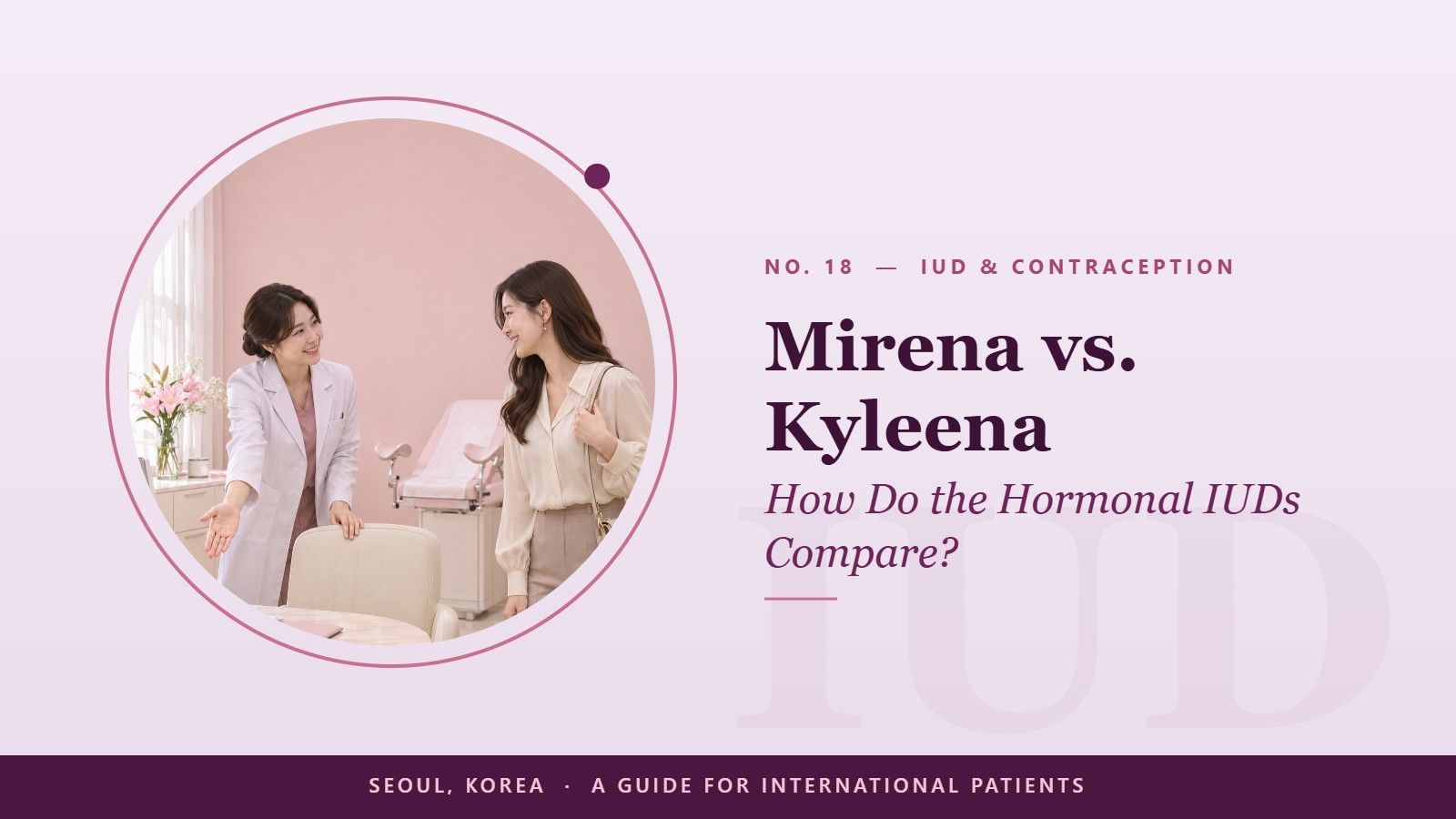
Mirena vs. Kyleena How Do the Hormonal IUDs Compare?
November 20, 2026
Mirena vs Kyleena - comparing hormonal IUD size, hormone dose and duration
Quick answer

Mirena and Kyleena are both levonorgestrel hormonal IUDs made by the same company. Mirena contains more hormone (52 mg), lasts up to 8 years for contraception and is also used to treat heavy periods. Kyleena is slightly smaller, contains less hormone (19.5 mg) and lasts up to 5 years, which may suit people who have not given birth or want a lower dose. Mirena is more likely to stop periods altogether.

52 mg Mirena hormone content
19.5 mg Kyleena hormone content
Up to 8 yrs Mirena contraception
Up to 5 yrs Kyleena contraception

1 Head-to-head comparison

Mirena Kyleena
Hormone Levonorgestrel 52 mg Levonorgestrel 19.5 mg
Size (T-frame) 32 × 32 mm 28 × 30 mm
Insertion tube width 4.4 mm 3.8 mm
Contraception duration Up to 8 years Up to 5 years
Treats heavy periods Yes, approved use Not an approved indication
No periods at 1 year About 20% About 12%
Hormonal side effects Slightly more likely Slightly less likely

2 Choosing between them

  • Heavy menstrual bleeding or adenomyosis: Mirena is usually preferred.
  • Never given birth or a small uterus: Kyleena’s slimmer tube may be more comfortable.
  • Want the longest protection: Mirena lasts longer.
  • Sensitive to hormones (acne, mood, breast tenderness): Kyleena’s lower dose may suit.
  • Perimenopause with HRT: Mirena can provide the progestogen part of hormone therapy.

3 Side effects in common

Both can cause irregular spotting in the first 3–6 months, mild cramping, headaches, breast tenderness or acne. Ovarian cysts can occur and usually resolve on their own. Serious problems such as expulsion, perforation or infection are uncommon and most likely in the weeks after insertion.

Tip: if you are unsure, ask your doctor to measure your uterus on ultrasound before choosing; size and your bleeding pattern are often the deciding factors.

4 Costs in Seoul

Device Typical self-pay range (incl. insertion)
Kyleena About ₩350,000–450,000
Mirena About ₩350,000–500,000

Mirena may be partly covered by national health insurance when used to treat diagnosed heavy menstrual bleeding or similar conditions. Ask the clinic what is included.

? Frequently asked questions

Which is more effective at preventing pregnancy?

Both are over 99% effective.

Can I switch from Kyleena to Mirena?

Yes. Removal and a new insertion can usually be done at the same visit.

Does Kyleena hurt less to insert?

Its narrower tube can make insertion a little easier, but experiences vary.

Will either affect fertility after removal?

No. Fertility usually returns quickly after removal.

Can teenagers or young adults use these IUDs?

Yes. Both are suitable for many people who have not had children.

This article is general health information, not medical advice. Costs and rules mentioned are general guides as of late 2026 and can vary. Please consult a qualified doctor about your own situation.
Hormonal IUD vs birth control pills for heavy periods - treatment comparison
By No author • November 20, 2026
Heavy periods: hormonal IUD (Mirena) vs. birth control pills compared for bleeding reduction, side effects, daily effort, cost and insurance in Korea.
IUD vs birth control implant - comparing insertion, side effects and removal
By No author • November 20, 2026
IUD vs. contraceptive implant (Implanon/Nexplanon): how each is inserted, effectiveness, bleeding changes, side effects, removal and availability in Seoul.
Hormonal IUD vs copper IUD - how each type affects menstrual periods
By No author • November 20, 2026
Hormonal vs. copper IUD: how each changes bleeding, cramps and spotting over time, who suits which type, and what to expect in the first 6 months.
IUD insertion in Seoul - what to expect before, during and after the procedure
By No author • November 20, 2026
IUD insertion in Seoul explained for foreigners: preparation, the 5-minute procedure, pain relief, aftercare, follow-up checks and average costs by IUD type.
LEEP vs cone biopsy - comparing cervical procedures and recovery in Seoul
By No author • November 20, 2026
LEEP vs. cone biopsy (cold knife conization): how each works, anesthesia, recovery time, risks, pregnancy effects and when doctors choose one over the other.
Colposcopy vs LEEP - comparison of cervical exam and treatment appointments in Seoul
By No author • November 20, 2026
Colposcopy vs. LEEP explained: one diagnoses, the other treats. Compare purpose, anesthesia, time, pain, recovery, fertility effects and Seoul costs.
What happens during a colposcopy and cervical biopsy - step-by-step guide in Seoul
By No author • November 20, 2026
What happens during a colposcopy and cervical biopsy: preparation, each step, how long it takes, pain, recovery, results timing and typical Seoul costs.
Abnormal Pap smear results - follow-up tests such as HPV testing and colposcopy in Seoul
By No author • November 20, 2026
Abnormal Pap smear? What ASC-US, LSIL and HSIL mean, which follow-up tests you may need (HPV test, repeat Pap, colposcopy, biopsy) and timelines in Seoul.
Can you get a Pap smear during your period - cervical screening timing guide in Seoul
By No author • November 20, 2026
Can you have a Pap smear on your period? How bleeding affects results, the best time in your cycle to book, light spotting, and what Seoul clinics advise.
HPV testing alone vs Pap and HPV co-testing - cervical screening options compared in Seoul
By No author • November 19, 2026
Primary HPV testing vs Pap and HPV co-testing: how they differ, accuracy, screening intervals, who each suits and what to ask for at a Seoul clinic.