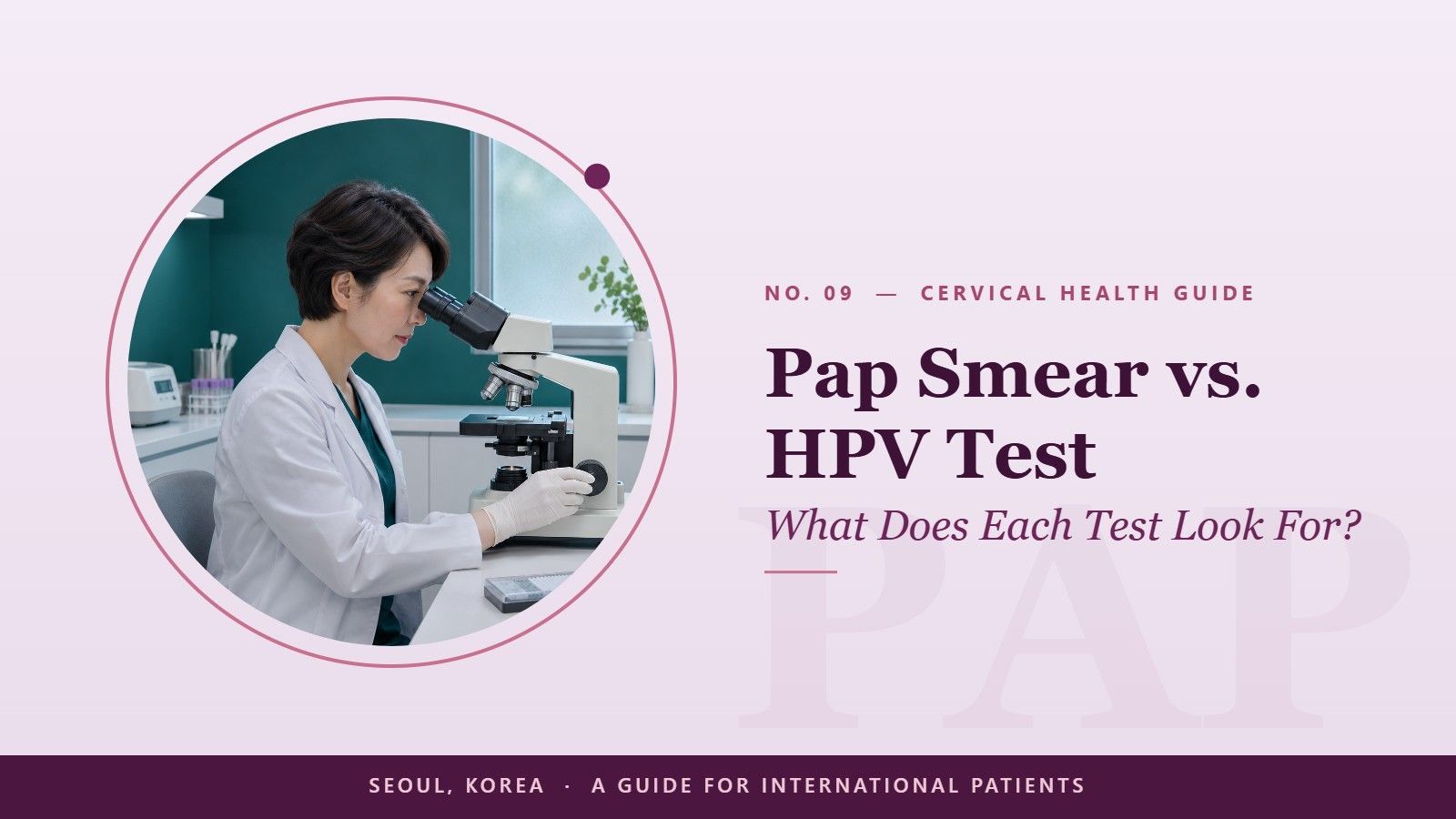
Pap Smear vs. HPV Test What Does Each Test Look For?
A Pap smear looks for abnormal cervical cells under a microscope, while an HPV test looks for the high-risk virus that causes most of those changes. Both use a similar swab from the cervix, and in Seoul they are often done from the same sample. HPV testing is better at spotting who is at risk, and a Pap smear shows whether cells have already changed.
1 The key difference in one table
| Pap smear (cytology) | HPV test | |
|---|---|---|
| Looks for | Abnormal or precancerous cells | High-risk HPV DNA or RNA |
| How it works | Cells viewed under a microscope | Lab test for the virus |
| Strength | Shows whether cells have changed | Very sensitive for future risk |
| Limitation | Can miss some early changes | Positive results are common and often clear on their own |
| Typical interval if normal | Every 2–3 years | Every 5 years (where used for primary screening) |
2 How the samples are collected
Both tests use the same exam: a speculum is placed and a small brush collects cells from the cervix. With liquid-based cytology, the brush is rinsed in a vial so the lab can run a Pap test, an HPV test or both. That means you usually do not need a second exam if the doctor decides to add an HPV test.
3 Understanding your results
| Pap result | HPV result | What usually happens |
|---|---|---|
| Normal | Negative | Routine screening |
| Normal | Positive | Repeat testing in about a year, or colposcopy if HPV 16/18 |
| ASC-US (borderline) | Positive | Colposcopy is often recommended |
| LSIL / HSIL | Any | Colposcopy and possible biopsy |
4 Which test should you ask for in Seoul?
- Under 30: a Pap smear is usually the main test, as HPV infections are common and often temporary at this age.
- 30 and over: adding an HPV test (co-testing) gives more information and may allow longer gaps between screenings.
- After an abnormal result or treatment: both tests are usually used for follow-up.
- Korean national screening: the free biennial program uses Pap smears; HPV testing is usually self-paid.
Self-pay costs in Seoul are roughly ₩30,000–80,000 for a Pap smear and ₩50,000–100,000 extra for HPV testing, depending on the method and whether genotyping is included.
? Frequently asked questions
Can an HPV test replace a Pap smear?
In some countries, HPV testing is now the main screening test from age 25 or 30. In Korea, Pap smears remain standard in the national program, with HPV testing commonly added.
Does a Pap smear test for HPV?
Not automatically. HPV testing must be requested or ordered, though it can use the same sample.
What is HPV genotyping?
A test that identifies specific types such as 16 and 18, which helps decide whether colposcopy is needed.
Are these tests painful?
Both feel the same: brief pressure from the speculum and a quick brush.
Should vaccinated women still be screened?
Yes. The vaccine does not cover every high-risk type, so regular screening is still recommended.
This article is general health information, not medical advice. Costs and rules mentioned are general guides as of late 2026 and can vary. Please consult a qualified doctor about your own situation.